Coal vs Gas Forges: Which Is Better for a UK Hobby Blacksmith?
Most arguments about forges come down to one question, asked in a shed with the door half open: coal or gas? Both fuels will bring steel to a working heat, and both will teach you to move metal. The difference shows up everywhere else — in your fuel bill, in what the neighbours can smell, in how much of your session goes on tending the fire rather than standing at the anvil, and in whether you can realistically run a forge in a garage with a roller door and no chimney.
What each fire actually does
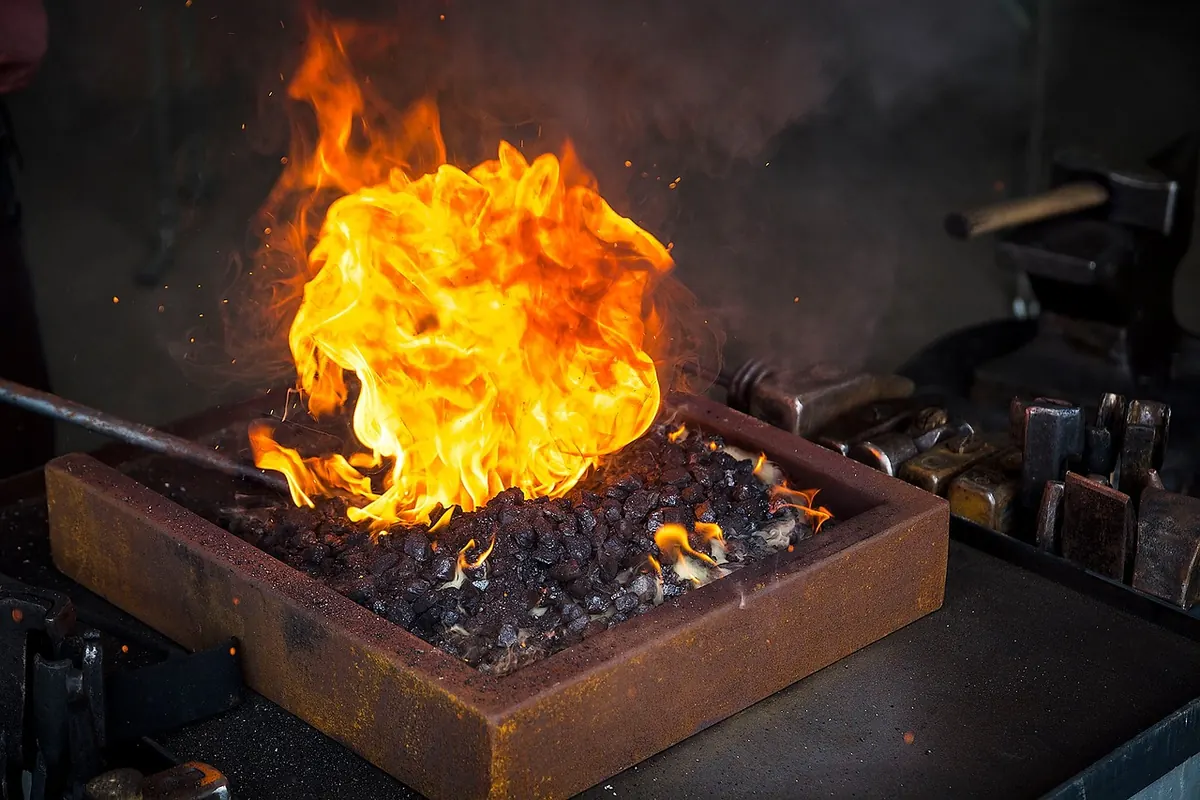
A solid fuel forge is a shallow hearth with a cast iron firepot or fabricated steel table, a tuyere underneath, an air blast from a hand crank or small electric blower, and a hood and flue above. You light it with paper and kindling, then bank green coal around the burning heart of the fire and let it coke down as you work. The first ten minutes or so produce thick yellow-white smoke while the volatiles burn off; after that, a well-managed fire is mostly heat, warmth and a faint haze out of the flue.
A gas forge is a refractory-lined chamber with one or more venturi or blown burners feeding propane into it. You crack the valve, light it, give the lining a few minutes to warm through, and forge. No ash, no clinker, no black hands — and no visible sign of what the fire is doing to the air around you, which matters more than most people expect.
Running costs, honestly compared
Fuel prices move around too much to quote here, and how you work changes the maths dramatically. A smith running a small fire and working steadily with tongs in hand can get a long session out of very little coal or coke. Someone who stops every few minutes to think, measure and chat will burn far more, because a solid fuel fire keeps eating fuel whether or not you are hammering. You can bank it down and slow it, but you cannot switch it off.
Gas is the opposite: it costs more per hour in most setups, but the fire is ready when you are and gone the moment you close the valve. For short evening sessions, that often works out cheaper in practice than it looks on paper.
The kit costs differ too:
- Gas: forge shell, burner, lining and rigidiser, regulator, hose, plus a propane cylinder and a spare if you do not want to run out mid-project.
- Solid fuel: hearth and firepot, blower or hand crank, hood and flue, plus a dry place to store fuel where damp will not turn it into a brick.
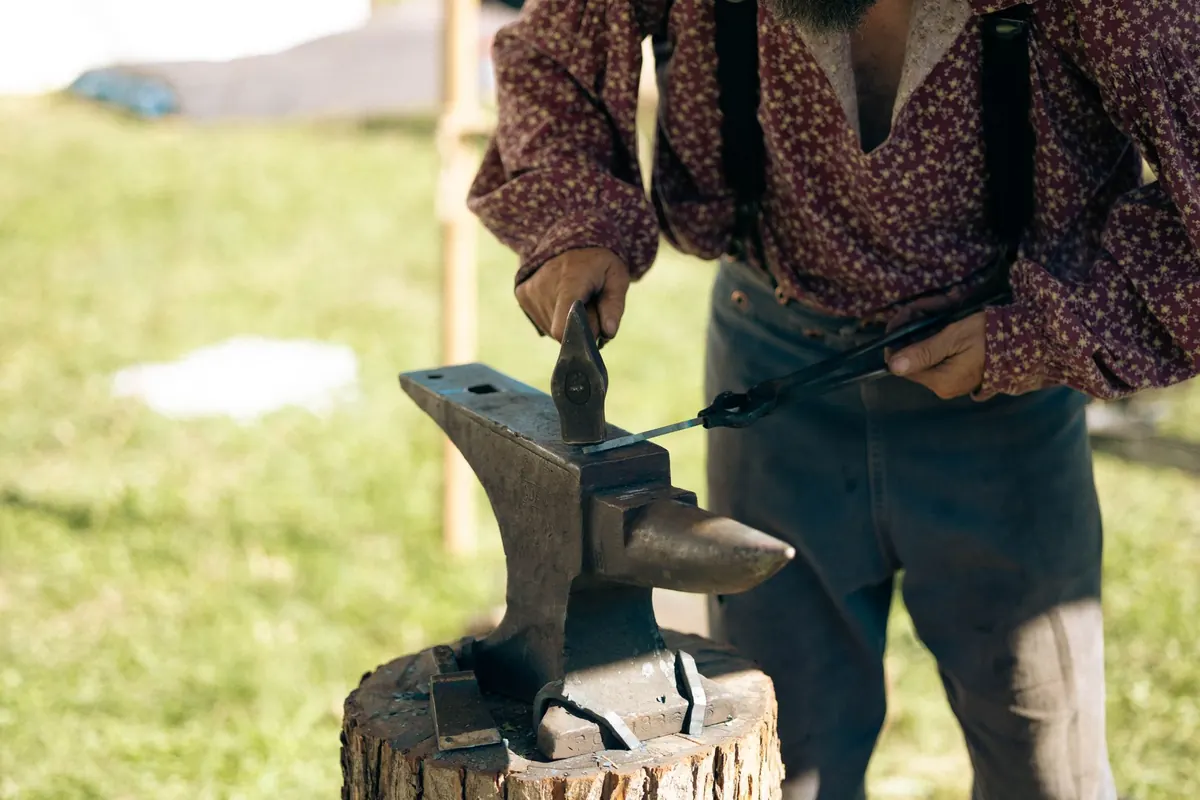
- Both: anvil, tongs, hammers, files, a decent vice and eye protection. None of that changes with your fuel choice.
Smoke, smell and neighbours
Coal is the fuel that gets noticed. The light-up smoke is the obvious one, and black smoke from the stack usually means wet fuel, too much green coal on the fire, or not enough air through the tuyere. Get those right and the fire is far cleaner than the reputation suggests. Coke burns cleaner again but is harder to light and needs a stronger blast.
Gas produces no visible smoke at all, which is exactly why it deserves respect. A propane forge in a closed garage can fill the space with carbon monoxide you cannot see or smell. Fit a carbon monoxide alarm, keep a door or window open, and never treat a sealed workshop as safe just because the air looks clear.
In the UK, smoke from a chimney in a designated smoke control area is an offence, and local authorities can act on smoke that causes a nuisance regardless of where you live. Domestic fuel rules have also tightened in recent years, with variations between the nations of the UK, so check what your supplier can legally sell you and what your council's environmental health team expects. If you are forging commercially rather than as a hobby, take proper advice before you commit.
Control, and what each fire is good at
The solid fuel fire is a tool you shape. Bank the coal tight and you get a small, fierce heat for bending a scroll on thin stock; open it out and bury a billet in it and you have welding heat. You can run it slightly reducing for forge welding, and you learn to read the colour and the feel of the fire in a way that transfers to every other part of the craft. The trade-off is attention: clinker forms, the fire needs raking, and a piece left in too long will burn.
Where a gas forge wins
Consistency. The chamber sits at a steady temperature, which suits beginners learning to judge colour, repeatable batches of small work, and anyone who wants to be hammering within five minutes of opening the shed. The limits are that you generally heat the whole piece rather than a local section, that some forges have a hot spot right in front of the burner, and that borax flux will eat through a ceramic fibre lining over time. If you plan to do a lot of forge welding, ask how the lining is protected.
Choosing for a UK shed, garage or garden
Be honest about your space, your neighbours and your session lengths before you spend anything.
- Choose gas if you work in a garage or small shed, live in a terrace or a smoke control area, forge in short bursts after work, or want to learn hammer technique without also learning fire management.
- Choose solid fuel if you have a yard with room for a hood and flue, a dry store for fuel, and the appetite for longer sessions — and especially if forge welding, pattern welding and traditional joinery are where you want to end up.
- Consider coke if you want solid fuel heat with less smoke, and you are prepared to work harder at lighting and air control.
- Check first: your insurance policy and your landlord if you rent, LPG storage and hose condition, flue clearance from anything combustible, and where sparks will land on a concrete or gravel floor rather than shavings.
Pick the fire that fits the space you actually have, then learn it properly before blaming it for your welds.
A practical way forward
If you can, get hands-on time with both before buying. A local blacksmithing group, an evening class or a day course will tell you more in an hour than any comparison can. Failing that, start with whichever suits your site — a small single-burner gas forge is the easier first purchase for most garages, while a simple hearth and hand crank is the cheaper route if you have the outdoor space and the patience.
Plenty of hobby smiths end up with both, using gas for quick weekday sessions and the coal fire for welding and longer weekend work. Fit a carbon monoxide alarm, keep your fuel dry, replace a cracked hose rather than taping it, and treat the fire as the tool it is: the one part of the setup you should be able to adjust with confidence, whatever it burns.
Photo: jenszhonk / Pixabay