How to Choose Your First Blacksmithing Course in the UK
A day at the forge is nothing like the videos. The noise is bigger, the heat is stranger, and metal that looks dull grey is often hot enough to burn you before you've felt a thing. Good teaching is what keeps you safe and stops you picking up habits that take years to unpick. Choosing that first course carefully is worth an evening of research.
Decide what you actually want from it
There are broadly two kinds of beginner course: the experience day, where you make a finished object to take home, and the skills course, where you spend the time on core processes instead. Neither is better. A taster day tells you whether you enjoy the work, and you leave with something to show for it. A skills course usually leaves you with a set of small samples and a much better foundation.
Think about why you're going. If it's a birthday gift or a weekend curiosity, book the experience day and enjoy it. If you're quietly wondering whether this could become a serious hobby, look for a course that teaches drawing out, upsetting, bending, twisting, punching and hot cutting, even if you only make a simple hook. Those are the moves everything else is built on.
Safety comes first, and it's fair to ask
Any reputable workshop will welcome these questions. If a provider is vague or defensive, take that as your answer.
- Insurance and risk assessments. Ask what public liability cover the workshop holds. You don't need to see the paperwork on the website, but a straightforward answer is a good sign.
- Supervision. Who is teaching, and is anyone else helping? On your first day you want someone nearby, not someone reachable by shouting across a noisy workshop.
- Protective equipment. Eye protection, ear defenders, leather aprons and gloves should be supplied or clearly listed. Bring sturdy boots and cotton clothing — synthetics melt.
- Emergency kit. Burns kit, first aid, fire extinguishers and someone trained to use them. In a forge this is basic housekeeping, not a bonus.
- Ventilation. Coke forges and grinding both produce smoke and dust. Ask how the workshop deals with it, and whether you'll be working under extraction or with the doors open.
Every workshop has a slightly different way of working, so expect a safety briefing at the start. Listen to it properly; the rules exist because someone got hurt once.
Class size tells you how much time you'll get
Blacksmithing is a waiting game if the numbers are wrong. Two students to a forge is fine; ten students to one fire is a day spent watching. Ask how many forges and anvils there are, and how many people will be in the group.
As a rough guide, a beginner group of four to six with one tutor works well. Bigger groups can still be good if there are extra forges, plenty of hand tools and an assistant. Small groups cost more, and they're usually worth it for the first day, because most of what you learn comes from someone standing next to you saying "less hammer, more heat".
Which techniques are covered
Course descriptions are often written for marketing rather than clarity. Ring or email and ask what you'll actually do between nine and five.
Look for heat, hammer and control
A solid beginner course covers fire management — how to lay and maintain a fire, what a welding heat looks like, how to judge temperature by colour. Then basic hammer technique, which is far more about control than force. Then the core forming processes: drawing out, upsetting, bending, twisting, punching and cutting. If the description mentions finishing, heat treatment or basic joinery such as a mortise and tenon, so much the better.
Be wary of promises that are too tidy
Making a knife in a day is possible, but you won't be forging and finishing it well in six hours. Something like a bottle opener, a hook, a poker or a simple candlestick is a realistic day's work and teaches plenty. Ask what happens if your piece doesn't come together — a good tutor has a plan B, because they've seen it before.
The workshop itself
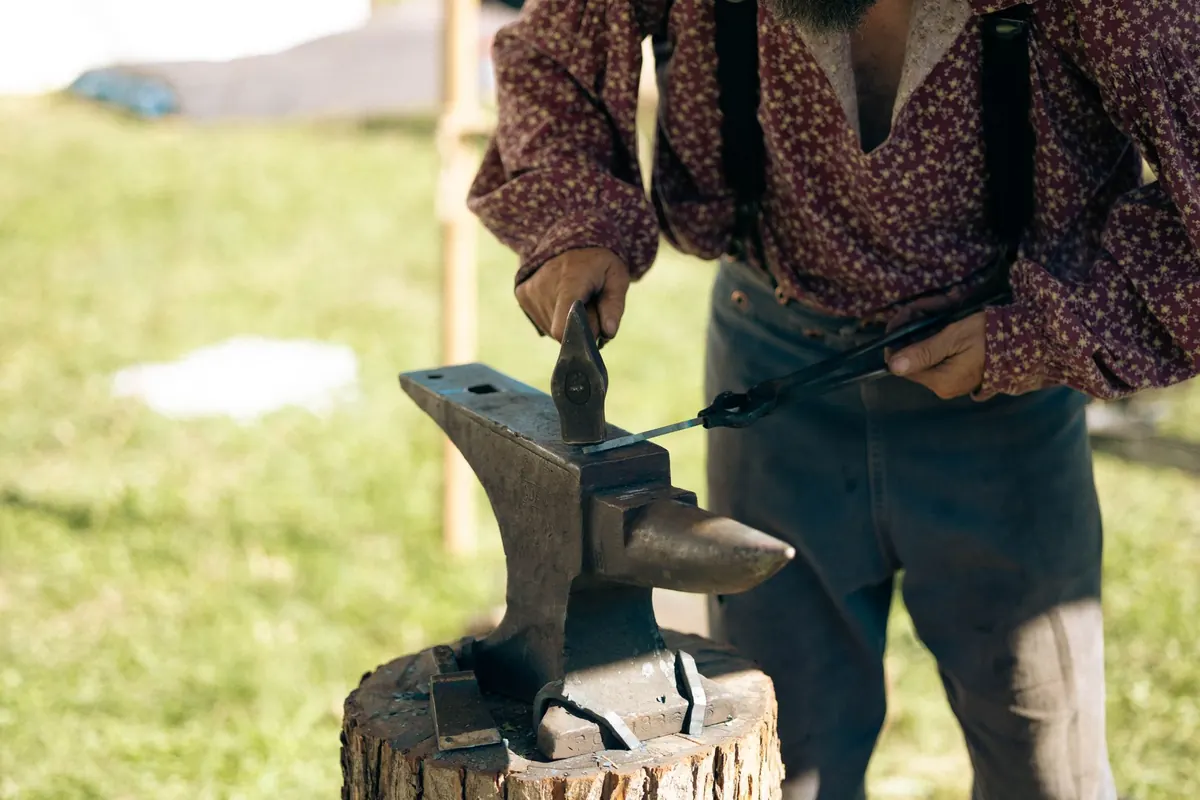
Equipment matters, but not in the way beginners expect. One gas forge between two people, a decent anvil at a sensible height, leg vices, hammers in a range of weights and a grinder are what you need. A power hammer is a bonus, not a requirement.
Ask whether they use coke or gas. Gas is cleaner and easier to control; coke teaches you fire management and feels more traditional. Neither is wrong. Also ask what steel you'll be working with and whether you keep what you make. Fuel, steel and consumables are sometimes charged separately, so check what the price includes before you compare two courses.
Location, travel and stamina
Blacksmithing is physical. Six hours on your feet in the heat, swinging a hammer, will find muscles you'd forgotten about. If the nearest course is a three-hour drive each way, book a weekend and stay over rather than arriving exhausted. Heritage forges, rural craft centres, colleges and working smiths' own workshops all run courses, and the setting often shapes the teaching.
Consider the season too. Workshops with big doors open are lovely in June and punishing in January. If you have a heart condition, a back problem or any other health concern, speak to your GP before booking, and tell the tutor so they can adjust the pace.
Questions to ask before you book
- How many students, how many forges, and who is teaching?
- What will I have made by the end of the day?
- What's included — steel, fuel, tools, lunch, and the piece itself?
- What should I wear and bring?
- What's the cancellation and transfer policy if I can't attend?
- Is there a follow-on course if I want to keep going?
- Can you send me a couple of photographs of a previous beginner group's work?
Book the small one first
Start with a one-day course and a small group, even if it costs a little more. You'll get more time at the anvil, more correction and a clearer idea of whether this is for you. Take a notebook, photograph your finished piece, write down what you struggled with, and ask the tutor what to practise next. That single day is the cheapest way to find out whether blacksmithing deserves a permanent place in your weekends.
Photo: Tho-Ge / Pixabay